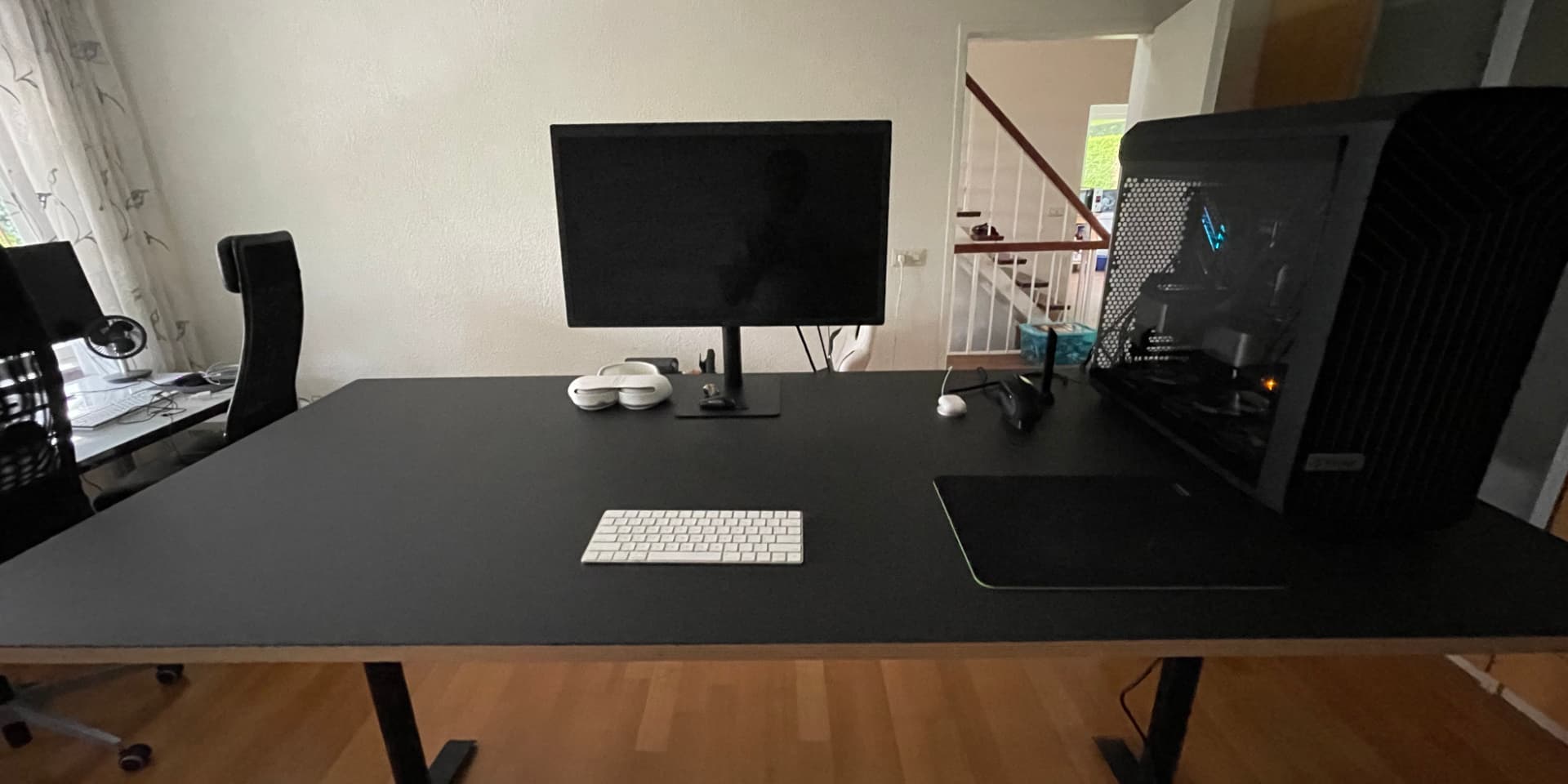
Farewell to working from home: a developer on the return to office
TL;DR: Dutch companies are cutting back on working from home, and they point to productivity. I think they are right, just not for the reason they give. AI now handles more and more of the focused, heads-down execution that working from home was so good for. What's left is the work of coming up with new ideas, and that work still happens best face to face.
Big companies left and right are saying goodbye to working from home (WFH) in the Netherlands. The most visible moment came when Booking.com took its own works council to court over mandatory office days, after the council refused to agree to them. The company won: the Amsterdam court ruled that Booking may require employees to spend at least 40% of their working time in the office.
Booking.com is not alone. ABN AMRO wants staff in the office at least half of their working time, and VodafoneZiggo, a former client of mine, wants to go from two office days a week to three. Across the ocean, Paramount Skydance went all the way back to five. The reasons they give vary: productivity, collaboration, knowledge sharing. But the message that sticks is that productivity drops when we work from home. Well, I think they are right. It's just not for the reasons they state.
What does productivity even mean for a developer?
According to Statistics Netherlands (CBS), labour productivity in the Dutch economy rose 2.4% in 2025, the biggest increase in twenty years. If I'm being honest, I always wonder how they measure productivity. So I thought about it. As a developer, I measure my productivity mostly in the user stories that I burn. Or rather, the features that I write in code AND ship to the end user. It's what I need to tell myself at the end of the day that it was a good one. But the more I think about it, the more I wonder if this is really what productivity is all about.
After all, we can ship features that nobody is asking for. Doing so won't deliver the company any benefit, yet by my old definition of productivity I should be happy, right?
With this in mind, I want to reframe productivity as "the stuff people do to make the company money". A developer's workflow is just one part of that, although a developer's input should be measured across far more slices of this pie than just the coding part.
I honestly don't know how productivity is measured in a general sense, but for now I'll stick to the definition that it's cost versus reward, in an economic sense. Of course, this will always be slippery territory. Are employees just a cell on a spreadsheet that turns either green or red? How hard can an employee be pushed to tip that balance? And is a manager's position safer if the people reporting to them come out more favorably?
Tipping the productivity scale: people versus AI
One common trend in the tech industry is replacing people with AI, and in many ways it makes sense. AI can be pushed, does not need to rest, and is, in a spreadsheet sense, far more productive than a human can ever be. It writes code like a 10x developer on steroids, can do almost anything, and does not need to spend time and effort researching topics the way a human does.
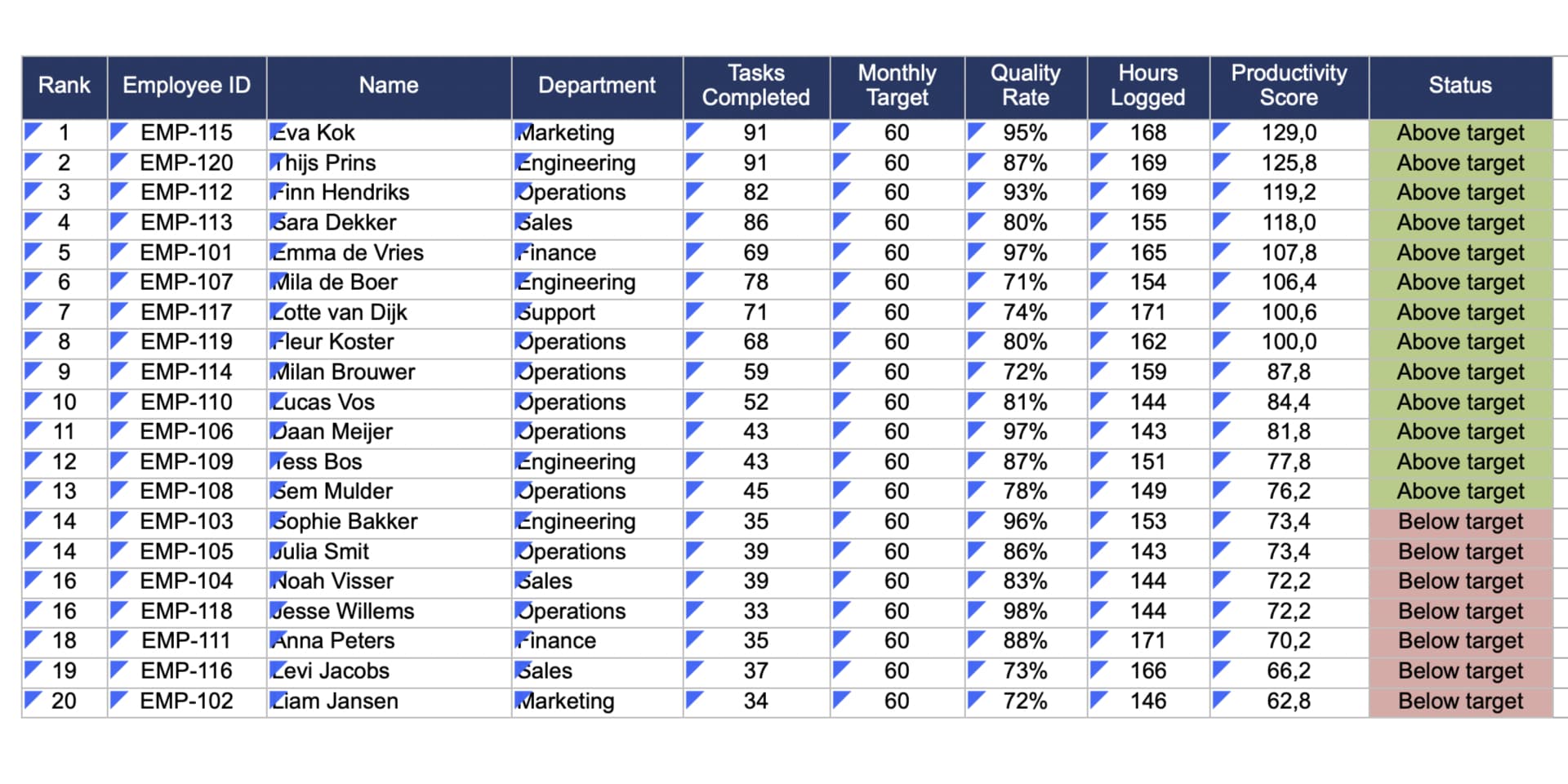
Yet despite this, we are also seeing tech companies hiring people again. Klarna, once the poster child of replacing customer service staff with AI, started hiring humans again after its CEO admitted cost had been "a too predominant evaluation factor". People are needed to step in and guide AI agents towards the work that actually moves the needle for a company. All of this is a different topic from working from home, but there is a parallel, which I'll explain later.
You see, I don't think we should see employees as "productivity agents", where the cost (FTE) is measured against the outcome (net profit). After all, what is a company anyway? At the end of the day, it's a group of talented individuals who have created assets such as a brand, documents and products in pursuit of a common goal.
Would a person really be motivated by being a green cell on a spreadsheet? I don't think so.
It's about truly believing in the company's common goal and being motivated to do what it takes to achieve it. A sense of fulfilment.
Why the work-from-home productivity gain matters less in the age of AI
What sets today apart from 2020, in many ways, is AI. When working from home was introduced, we were in lockdown and it was a necessity. Afterwards we kept working from home in some capacity, because it was clear that more energy for employees (less commuting, less friction) meant more energy for motivated individuals to deliver value. Hence productivity went up.
I honestly believe this paper-napkin math is still sound, and research backs it up. A randomized trial at Trip.com, published in Nature, found that two days of working from home per week had no effect on productivity or promotions, while cutting the number of people quitting by a third.
But AI has changed things. The kind of productivity that working from home boosted by a few percentage points is now being skyrocketed by AI. It's the kind of productivity where we put our headphones in, keep our heads down and get the words on paper, the code in git or the PowerPoint on the screen. Let's call it getting-things-done mode. Focus and energy reign supreme here.
If AI is so much better at many of these tasks, does working from home still make sense?
Honestly, sometimes I think perhaps not.
AI is great at execution, not at invention
What is a company, if not a few talented individuals with a common goal? I would argue that in the new model of work, AI can do the execution phase of many cognitively demanding tasks. But what AI is less good at is innovation: coming up with something totally new, unrooted in what came before it. Not an iteration, but an innovation. A study in Science Advances found exactly this tension: writers who used AI ideas produced stories that were rated as more creative individually, but those stories were also more similar to each other. AI raises the average, but narrows the range.
I wrote before about how we often value jobs solely by their economic output. I think companies will still want talented people around, because if one invention makes it, it can earn a company exponentially more money. One innovative angle can lift the conversion rate of a product and be worth millions.
A real example of this comes from sports. In 2009, one technical innovation in Formula 1, the double diffuser, helped a team that was strapped for cash win both world championships. The team was Brawn GP, rescued on a limited budget after Honda pulled out of the sport. The idea is credited to a young Honda aerodynamicist who read between the lines of the rulebook and used engineering skill to come up with a single part so influential that it changed the team forever. That team became Mercedes, which went on to win eight constructors' championships in a row, from 2014 to 2021.
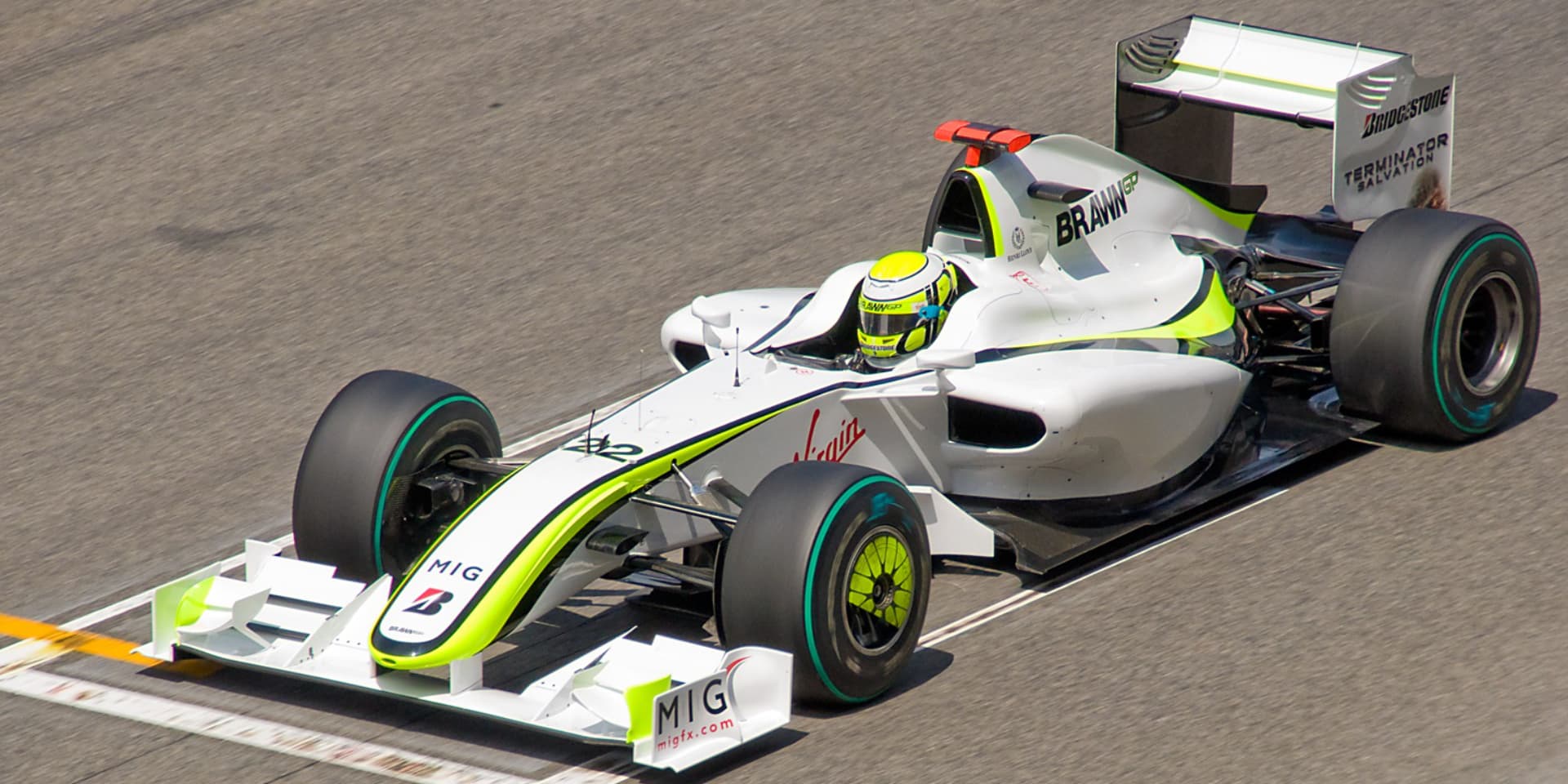
Jenson Button in the Brawn BGP 001, Spanish Grand Prix 2009. Photo: Jose Mª Izquierdo Galiot, CC BY 2.0, cropped.
Why the office fits the work of tomorrow
If I were in charge of a large group of people, I would want them to:
- Believe in, and help shape, the common goal of the company
- Be empowered in their role
But what that role looks like is changing so fundamentally that I would start looking at the creative side of work. How can I motivate employees to be creative, and great at guiding agents to rapidly execute on great new ideas? In my experience, the initial phase of work involves an idea and a risk. In this fragile state, nothing beats seeing eye to eye in a brainstorm session. Really feeling part of the team chasing that common goal. Being willing to invest in something that may not work, even when there is doubt. Being right there next to your colleagues, face to face, is what it takes to come up with your best work.
That's not just a gut feeling. In a study published in Nature, pairs who brainstormed in person came up with more, and more creative, ideas than pairs on a video call. Staring at a screen narrows our focus, and a narrow focus is great for execution, but not for ideas.
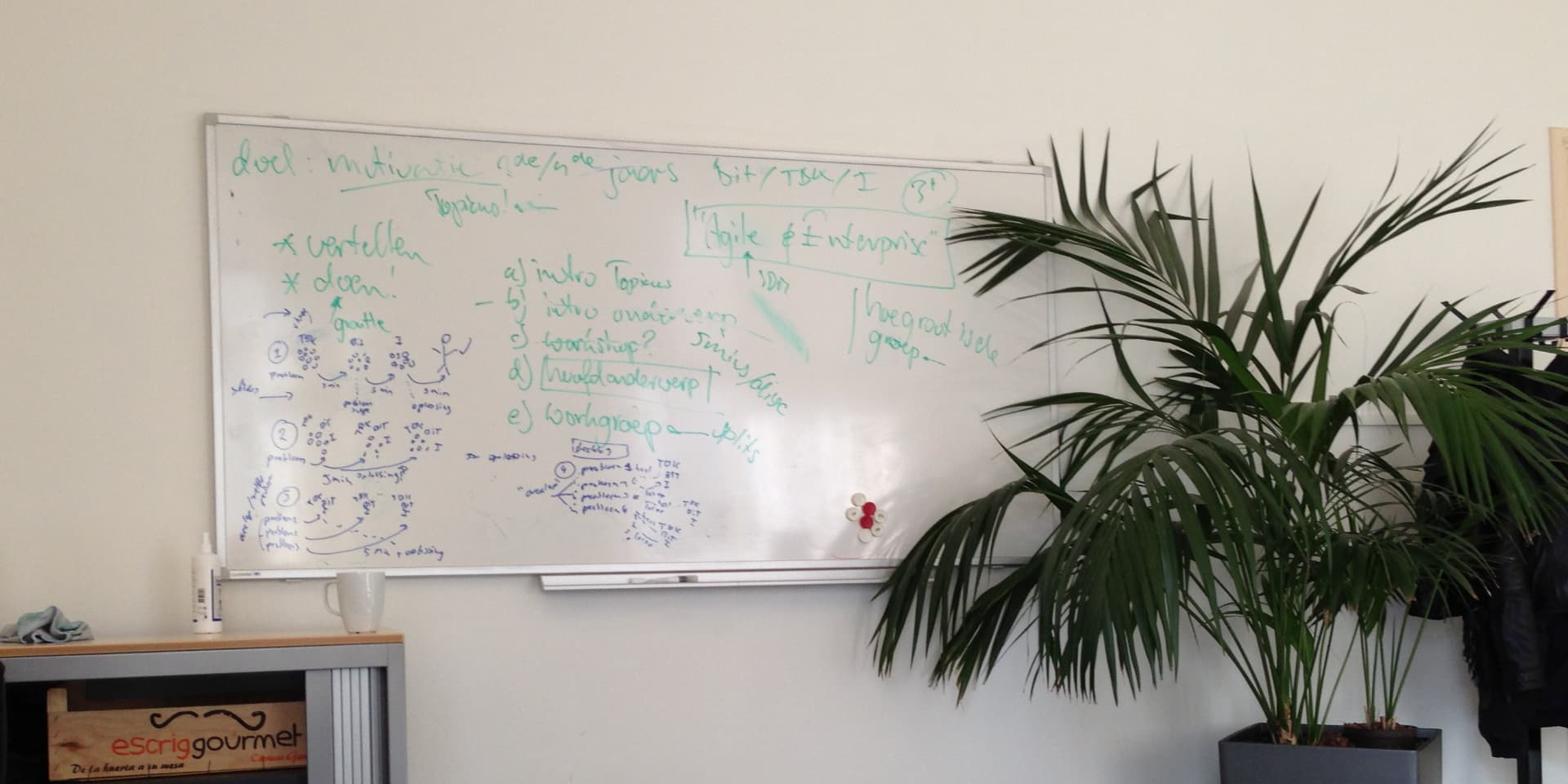
That's the shift I think a lot of office jobs will go through. It's less about executing, and more about knowing what to execute and when. I wrote about this in Is AI just another syntax for developers?: as implementation gets faster, decision making becomes the bottleneck. And yes, just maybe, the working-from-home model does not fit that way of working very well.
RIP working from home, 2020–2026
Yes, I'm going to miss the superior hardware I have at home. And I'm going to hate not being able to be laser-focused on the task at hand quite as often.
All I ask is that you, the companies, don't generalize by saying that productivity goes down when people work from home. One disappointing team or one slow quarter turned into "working from home doesn't work" is a textbook case of overgeneralization: treating one experience as a rule that applies to everything. Instead, just say it for what it is. That perhaps you know that where we are going means leaving some good things behind.
You will be missed. RIP working from home, 2020–2026.
Looking for a developer who brings ideas to the table, at home or in the office? Have a look at my projects or hire me as a developer.
Sources
- HR Praktijk, Rechter: Booking.com mag minstens 40 procent kantooraanwezigheid verplichten (October 2026)
- Accountant.nl, ABN AMRO wants staff in the office more often (August 2026)
- Accountant.nl, VodafoneZiggo wants staff in the office more often (November 2026)
- NBC News, Paramount mandates 5-day-a-week return to office (September 2025)
- CBS, Labour productivity in the Dutch economy up by 2.4 percent in 2025
- Entrepreneur, Klarna is hiring customer service agents after AI couldn't cut it on calls (May 2025)
- Bloom, Han & Liang, Hybrid working from home improves retention without damaging performance, Nature (2024)
- Doshi & Hauser, Generative AI enhances individual creativity but reduces the collective diversity of novel content, Science Advances (2024)
- Brucks & Levav, Virtual communication curbs creative idea generation, Nature (2022)
- PlanetF1, The ingenious innovation that propelled Brawn GP title glory