Is AI just another syntax for developers?
TL;DR: Every generation of programming has lowered the barrier between an idea and working software. AI is the next step: we now "program" in plain language. That does not make developers obsolete. AI still lacks the context we carry in our heads, and as implementation gets faster, the new limiting factor becomes our ability to make good decisions.
If you can think it, you can make it. It's a saying a lot of people live by, and it has strong merits. It's romantic to live in a world where anything can happen. You imagine it and it becomes a reality. It's partly how I rolled into coding in the first place. When I was younger I had to make a choice: go for software development, or go for visual design. Make something that does not exist yet... or just visualize it.
To me, the saying above never told the entire truth. If you can think it, you can make it. I know a lot of people with great ideas, but they cannot make them. It would be impossible for me to build a rocket that can fly to the moon. Sure, I can think it. I simply do not have enough intrinsic motivation to build the dedication to ever get there.
But with the rise of AI, Claude and ChatGPT, this feeling is starting to blur. Within the digital realm these assistants are like fish in water, while we humans are sinking and trying to breathe through tubes. If we can think of it, the AI can build it for us. We all win, we are all visioneers now. Our super creative, context-gathering mind still beats even the best AI model out there. It's inherently harder for AI to think of something completely new; it needs to have seen it somewhere at some point. That's where we humans come in.
This is only in part a paradigm shift
The human in the loop is important, and it always has been. Back in the very beginning the friction to develop a computer program was high. We humans needed to be extremely precise, got very little help from the systems, and it took days to actually see the computation and know whether our assumptions and keystrokes were correct. One wrong keystroke and the cycle restarts: the error just killed our computer program.

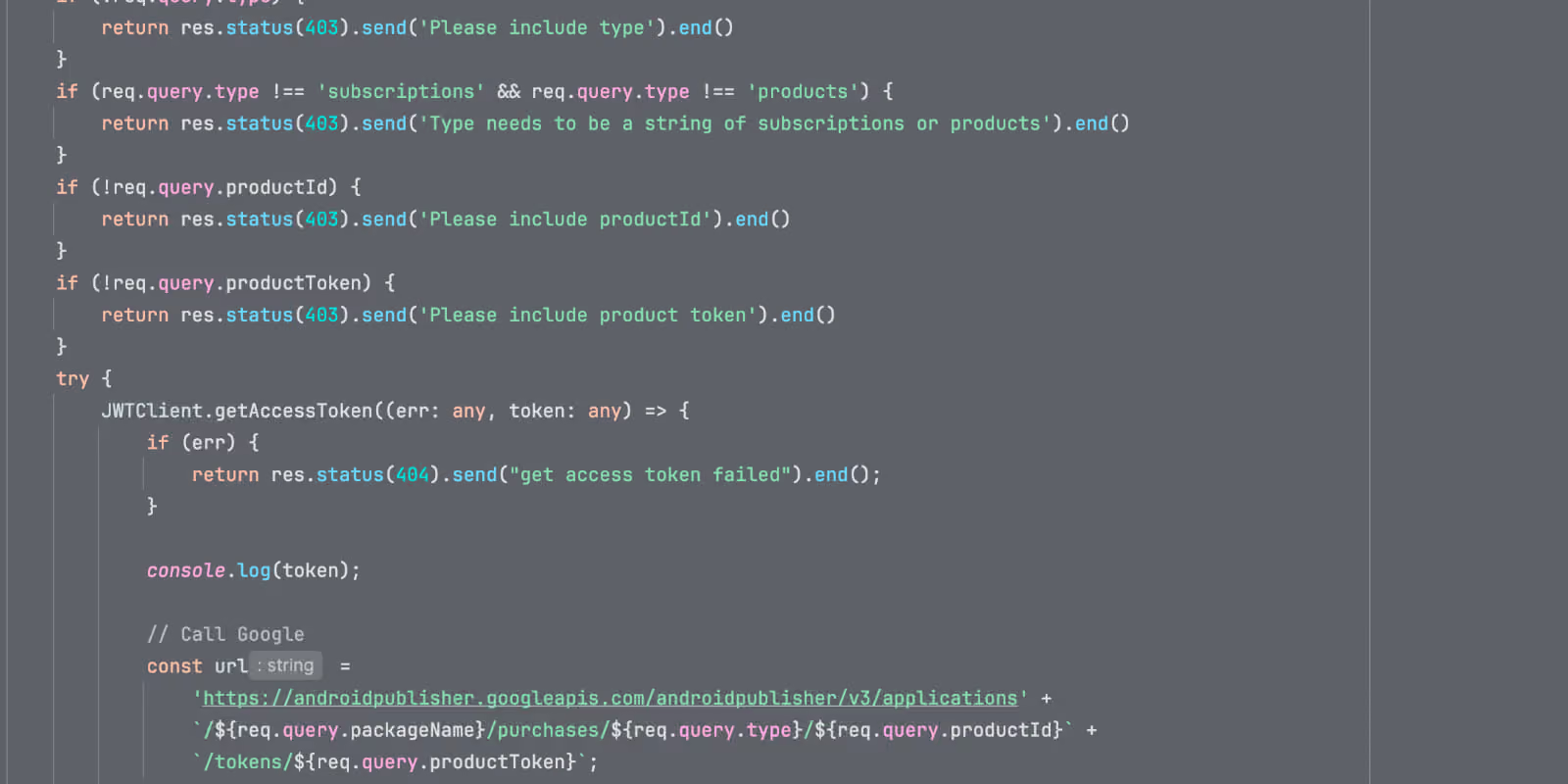
As computers evolved, so did our workflows. Now we can program the computer in near-English sounding language. You probably understand what is happening here: if (amHungry) { doEat() }.
Since 2022 we have been in the age of AI, and we can write the line above by simply prompting: "I want to eat when I am hungry". The barrier to creating something digital is lower than it has ever been. Visually too. Imagine a horse on a bike, and bang, we've got it. That would have taken careful work in Photoshop in the past: cutting out a horse, deciding on the lighting and carefully repositioning both objects in the hope of finding the perfect fit.
Not today. Slow manual labor is no longer driving this syntax of tomorrow. Our creativity and decisions are, and they are becoming a much larger part of our workflows. But that does not mean progress is dead.
We still need developers
I hear a lot of arguments that the output of the agentic workflows these AI tools run is not always great, and that's correct. In my own profession as a software developer, I find it does a few peculiar things out of the box:
- It writes a lot of code for simple tasks. This makes the output hard to read for a human. Why does it need to write two abstractions for a change it can make in one or two lines? It's almost a scientific approach to every problem, regardless of size. It wrote it this way because we can then reuse it elsewhere, even when we humans know it does not help legibility and that we don't need it elsewhere.
- It cannot know anything you don't tell it. Logically, it cannot think of what it is not given. This is not how we humans program, though. Deep down our mind is computing the next steps. What will happen after this feature goes live? What is the logical next ask from the product manager? Will my colleague be able to code review my change? AI does not ponder these questions out of the box.
Skills, workflows and agents
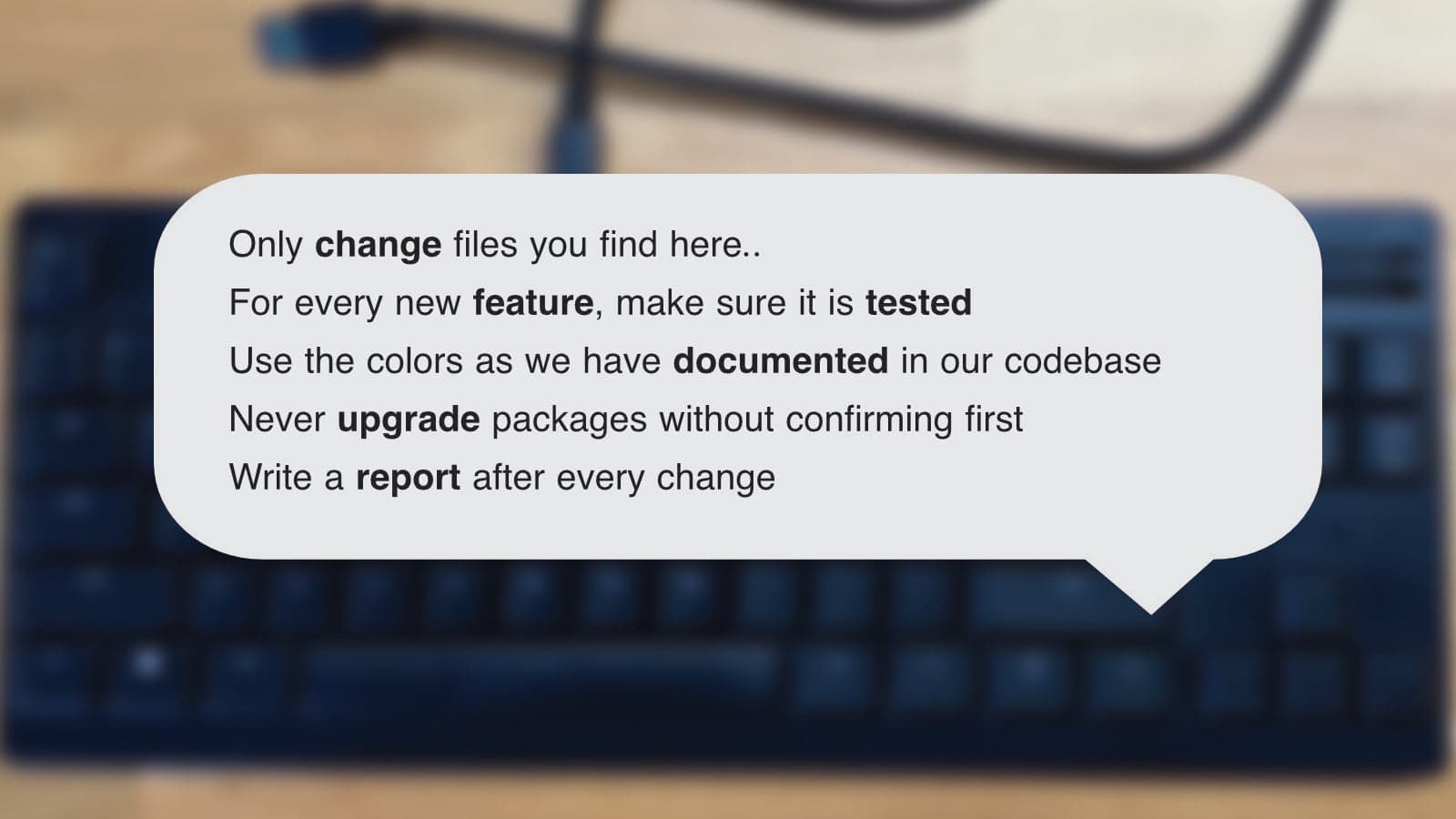
Developers can bridge this gap in the AI's thinking by writing skills, adopting workflows and programming agent farms. Fundamentally, all of these solve the problem of context. If the AI knows exactly what is expected of it, and can find exactly what it needs for the job, the output will be better.
It's like asking a car dealer which car would fit your lifestyle without telling them you are only going to drive off-road.
But even these elements of AI are not hard to program the way computers were back in the '70s and '80s. You tell it how you want it to behave in regular language, too. The barrier to entry is, again, lower than that of the programming languages it generates, like C or Java.
Adopting the low-barrier workflow of tomorrow
So all this AI talk got me thinking. In a future where our main interface is perhaps no longer a code editor but a prompting interface in human language, what will be the new limiting factor in the way we work? In the past it was clearly the speed of the human behind the machine: the UX designer doing the research and creating the visuals, the programmer writing the function. In the future these workflows can go extremely quickly. A task that would have taken 36 days in the past can now be done before lunch.
The limiting factor could very well be energy or hardware, as I wrote about in the workforce of the future with AI. But that's outside my control as a developer, so I've parked it for now. Instead, I believe the new limiting factor we will face as developers working with AI will be decision making.
Are you telling the AI to implement the correct features? Should the button be green, gray, or a link at the bottom of the page? Are you providing the context it needs? How will the change impact conversion or the user experience?
Your workday will now be about making decisions as you go. Answering questions the AI can't answer. Deciding on the little things in your product. Deciding where to store data, how to handle migrations and how to keep user data safe. It's still the work we did as developers, but rather than spending most of the day implementing a decision, we now find ourselves already pondering the next one. The AI is working in the background; it's up to the developer to decide what comes next.