
Making 10,000 steps as a software developer
For the past month I have been trying to walk at least 10,000 steps per day. My goal was simple: spend dedicated time on low-intensity activity to improve my posture and clear my mind from the computer. Today I completed the final day of the challenge, and this is how it went.
Why I did it as a developer
Before we get into the differences I noticed, if any, I want to briefly explain why I did it. As a software developer I am seated behind my desk for most of my working hours. Early in my career I averaged about 4,500 steps a day, and mind you, that was back when working from home was far less common. I kept that average for a long time, until I got a dog just after COVID. And no, not a pandemic puppy. If you know, you know. I got him well after the lockdowns.
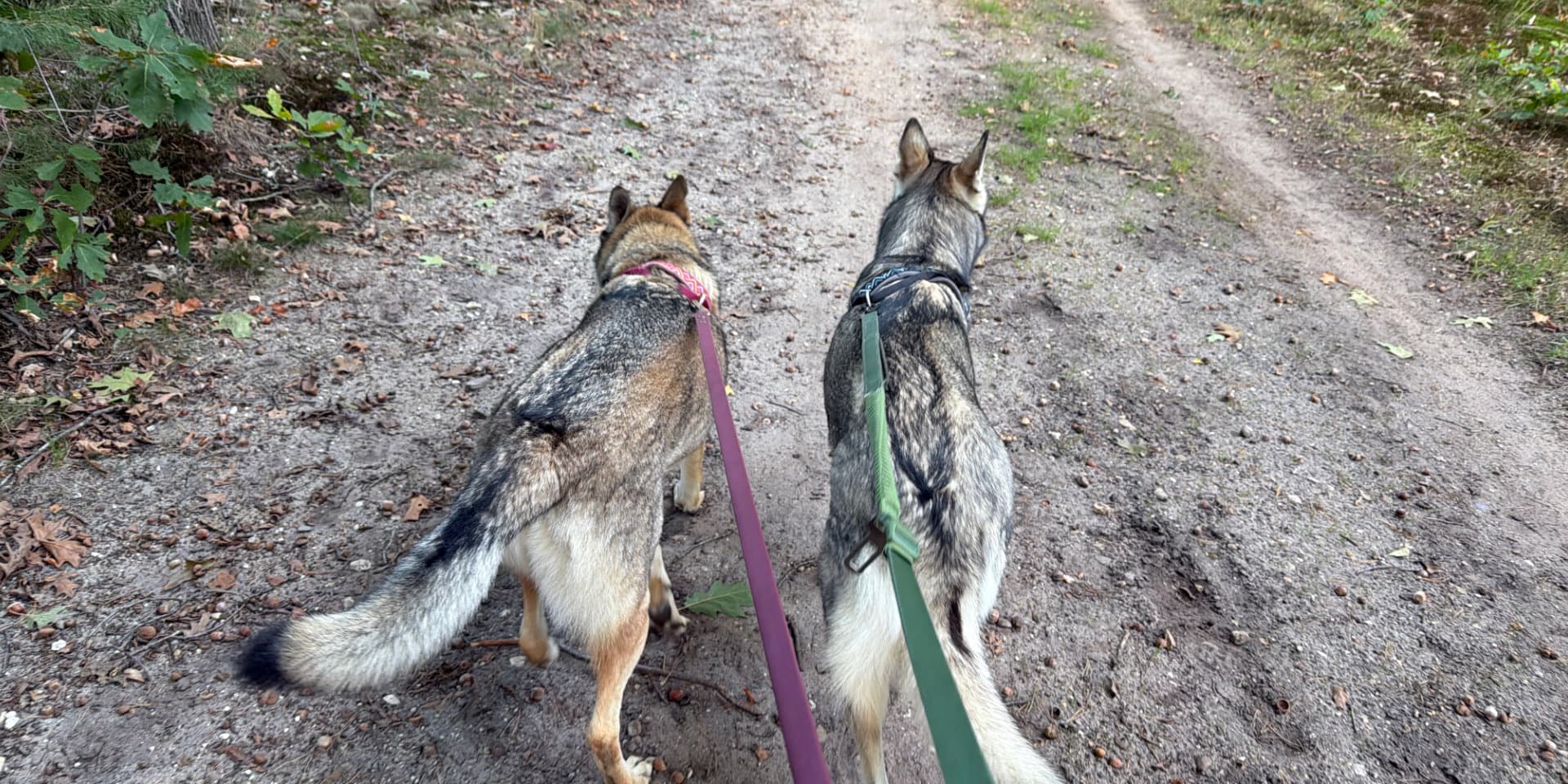
When I got the dog I noticed something strange: I was walking in nature again. I had lived next to a forest for many years, but I only really went out on exceptionally nice days, for leisure. Now that I had a dog, I felt a constant need to get my steps in. Not for me, but for him. My daily steps rose to about 7,000 on average.
So why did I want to push it further to 10,000? Two reasons. I am quite a sporty guy, but I noticed that long days behind the desk really hurt my cognitive performance as a developer. My mind would get blurry and my creativity would diminish greatly. I found myself throwing stuff at the wall, hoping something would stick. It rarely did. Yet I would often solve the problem the very next morning.
Was it easy?
To be honest, like many smaller steps towards a goal (no pun intended), I had to increase my daily steps by about 2,500, and initially it went great! The weather was nice and I found myself enjoying quality time with my dogs, who by now are two. One of them is a Northern Inuit who loves to walk outside and is just the nicest. After half a week the first difficult days came around: chores, a longer day at the office, and so on. Suddenly I had my first day where I had to manufacture the extra walk. I forced myself out just before bed and took the longer route back home.
This part was the most troublesome. I regularly found myself needing to manufacture the extra steps. I guess my average of 7,500 was that number for a reason. So I had to go out of my way to make the 10,000 steps happen. By the way, that number comes from a Japanese marketing campaign for a pedometer in the 1960s. It is not actually a magic number.
Manufacturing the numbers took more and more creative forms as my goal neared. I found myself walking laps around the living room during a movie, or stepping in place while waiting for my coffee. Better get the steps in early, I figured. I am not particularly proud of this, but it was basically what it took to reach my goal.
Then there was the weather. Here in the Netherlands we have plenty of days when I just did not want to go out: pouring rain and a cold breeze. Heck, even the dogs did not want to go. They make this very clear when I am standing at the door and they actively try to avoid me. It's kind of funny. There were definitely days when I had to catch them in the house first before setting off on my venture.

What did I learn?
I tracked a few things. I measured my body metrics using Apple Health, and I measured my mental health using Luci, where I logged my mood daily, with tags for what contributed to how I felt. The results were decent. I lost some weight during the month of extra walking. I think the biggest contributor was not only the steps, but also the time it took me to make them. The extra 30 to 60 minutes per day in which I could get bored and feel the urge to snack in front of the TV simply disappeared.
My cardiovascular performance (measured as VO2 max) did not improve, and my resting heart rate did not do much either. Going from 7,500 to 10,000 steps did not yield much there. Granted, I was never a couch potato. I like to exercise outdoors: I do my weekly runs and some lifting, and that did not change.
Mentally, however, I did see a lot of positive change. I checked the graphs and noticed that on the days before the challenge when I was especially sedentary (say 3,000 to 5,000 steps), I would feel pretty poor. Physically inactive, yet still tired. I would often experience what is sometimes described as brain fog. And to make matters worse, my back would start hurting.
By the way, a standing desk is also definitely a worthwhile purchase for back issues. I do find I have to force myself to stand, but when I do, it feels great.
These feelings became much less of an issue as I moved past 7,000 steps, and my best days started at around 8,000, as you can see in the graph below. Interestingly, days above 10,000 steps were no better than days with 8,000 to 10,000. I am sure it's not just the steps, but also being outside more. I felt more creative during the walks. Ideas and solutions came to me, and as a software developer that was a joyful, playful state to be in. It actually turned out to be very productive.
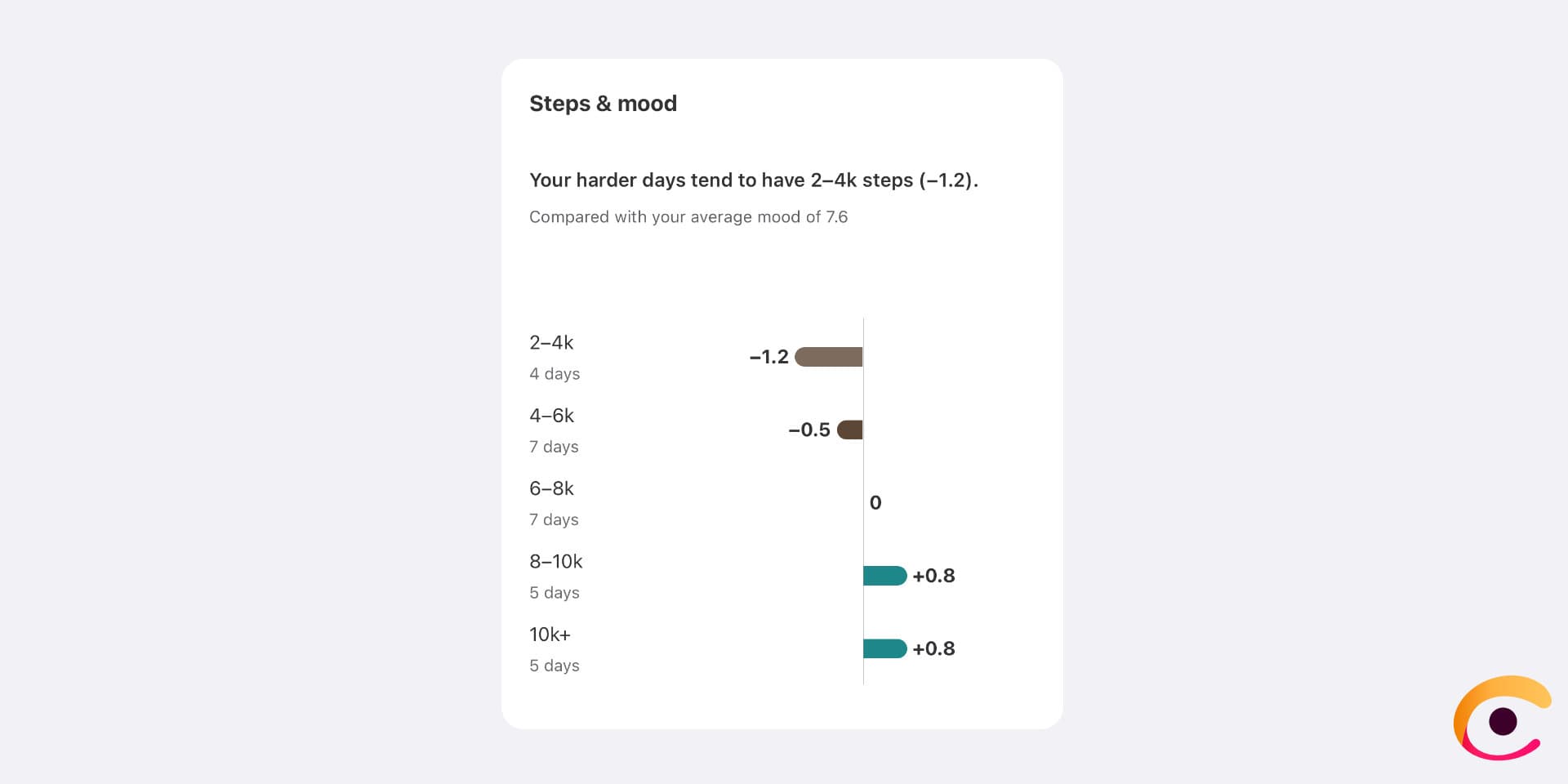
The graph comes from the new Steps & mood card in Luci, which pairs your step count from Apple Health with the moods you log, so you can see how you feel at different step ranges. If you want to know more about it, and what the research says about walking and mood, read Do your steps lift your mood? on the Luci blog.
Would I do it again?
To be honest, I would not do the 10,000 steps month again anytime soon. It is too difficult to achieve in my regular lifestyle, and it does not yield enough of a benefit. I will keep aiming for more steps, just not for that exact number. That hard cut-off point is largely unnecessary, I noticed. Research suggests we get most of the benefits a bit below 10,000, where we enter diminishing returns. My own graph shows the same: past 8,000 steps my mood did not improve any further. To hit the arbitrary mark of 10,000 I'd have to go for that extra short walk before midnight, or kind of cheat just to get there. That's not worth it.
Still, seeing my mental health in particular improve does make more steps in general worth considering. I think I will go for that walk whenever my step count is especially low. Now, an important caveat: do measure your steps, and if you are also at that low mark and have a less active lifestyle, I do recommend giving this a try. Maybe increase the amount by 20 to 30% at first. I found it really did wonders for my back. In the past I would either sit or be extremely active. The middle ground, where the body is not tensed up, is a good place to be. Both mentally and physically.
So, as a software developer, I would start by measuring your steps and deciding whether more of them are worth it for you. If you want to see how your steps relate to your mood, you can download Luci and find out for yourself.
Looking for a developer who knows when to step away from the keyboard? Have a look at my projects or hire me as a developer.





Interested in picking up a self-reflection routine? Try Luci from the AppStore, it's free!

Luci